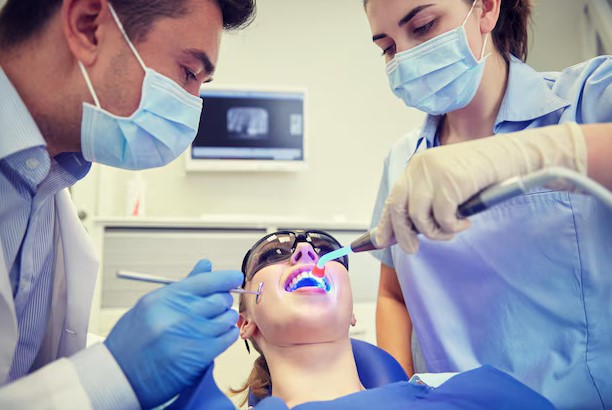
Most people view the dentist’s chair as a place of “last resort”—a destination only visited when a toothache becomes so unbearable that it overrides the fear of the drill. In my decade of writing for the health sector and observing clinical trends, I’ve seen this reactive approach lead to more heartbreak (and “wallet-break”) than almost any other health habit.
Think of your mouth as the front door to your entire body’s health. If the hinges are rusting and the lock is broken, it’s only a matter of time before the rest of the house feels the draft. In this deep dive, we’re going to peel back the layers on why dental checkups are far more than just a quick polish and a “see you in six months.”
Why We Wait Until It Hurts (and Why That’s a Mistake)
I’ve sat through countless interviews with periodontists who all say the same thing: Enamel does not have nerve endings. By the time you actually feel pain in a tooth, the “enemy” has already breached the outer fortress.
If you wait for pain, you aren’t looking for a checkup; you’re looking for a rescue operation. Regular dental checkups are designed to catch the silent whispers of decay before they turn into the screams of an abscess. In the medical world, we call this “asymptomatic progression.” In the real world, we call it a “sneaky bill.”
The “Car Maintenance” Analogy
Imagine never changing the oil in your car because “it’s still driving fine.” You might save $50 today, but you are guaranteeing a $5,000 engine failure down the road. Dental checkups are your oil changes. Scaling and polishing are the tune-ups that prevent your “engine” (your jawbone and teeth) from seizing up.
The Anatomy of a Professional Dental Checkup
A common misconception among beginners is that a dentist just looks for cavities. While that’s part of it, a comprehensive exam is much more “CSI” than you might think. Here is what is actually happening while you’re staring at those fluorescent ceiling tiles:
1. The Oral Cancer Screening
This is perhaps the most critical part of the visit that patients never notice. We practitioners are trained to look for soft tissue irregularities—discoloration, lumps, or asymmetrical patches on the tongue and throat. Early detection in this area is quite literally a lifesaver.
2. Periodontal Probing (The Depth Check)
Have you ever heard your dentist shout out numbers like “2, 3, 2, 4” to the assistant? They are measuring the “pockets” between your gums and teeth.
-
1-3mm: You’re a superstar.
-
4mm+: We’re entering the “danger zone” of gingivitis or periodontitis.
These numbers tell us if your bone structure is receding, which is the primary cause of tooth loss in adults.
3. Plaque vs. Tartar (Calculus)
Here is an insider insight: You cannot brush away tartar. Plaque is the soft, sticky film you can remove with floss. However, once it mineralizes into tartar, it becomes as hard as concrete. Only ultrasonic scalers and professional tools used during dental checkups can vibrate that “concrete” off your teeth without damaging the enamel.
The Systemic Connection: Your Mouth and Your Heart
One of the most fascinating developments in health research over the last decade is the Oral-Systemic Link. As a health writer, I’ve spent years tracking studies that connect chronic oral inflammation to systemic issues.
-
Cardiovascular Health: Bacteria from infected gums can enter the bloodstream, contributing to the inflammation of arteries.
-
Diabetes Management: It is a two-way street. Gum disease can make it harder to control blood sugar, and high blood sugar makes it harder for the body to fight mouth infections.
-
Pregnancy Complications: There is a documented link between severe gum disease and low birth weight or preterm births.
When you skip your dental checkups, you aren’t just risking a cavity; you are potentially ignoring a trigger for systemic inflammation.
Modern Technology in the Dentist’s Office
If your last memory of the dentist involves sharp metal hooks and scary X-ray films, you’ll be happy to know the industry has evolved.
-
Intraoral Cameras: These allow us to show you exactly what we see on a high-def screen. It’s hard to ignore a crack in your molar when it’s magnified 40x in front of your face.
-
Digital X-rays: These use significantly less radiation than traditional film and provide instant results, allowing for a more precise diagnosis of what’s happening beneath the gum line.
-
AI-Assisted Diagnostics: Some modern clinics now use AI software to scan X-rays, catching microscopic decay that the human eye might overlook during a busy day.
Pro Tips: Getting the Most Out of Your Visit
To move from a beginner to an intermediate “health-conscious” patient, you need to change how you interact with your dental professional.
💡 Pro Tip: The “Bleeding Truth”
If your gums bleed when you floss, do not stop flossing. Bleeding is a sign of inflammation, not injury. It means you need to floss more consistently to clear out the bacteria causing the swelling. Mention this specifically during your dental checkups so the hygienist can check for deep-seated tartar in that area.
⚠️ The “White Tooth” Myth
Just because your teeth are white doesn’t mean they are healthy. Many people use abrasive whitening charcoal or pastes that strip enamel. You can have a “Hollywood smile” while simultaneously suffering from stage 2 gum disease. Health is found in the pink (gums), not just the white (teeth).
Overcoming “Dental Anxiety”
If the sound of the tools makes your heart race, you aren’t alone. Approximately 36% of the population deals with dental anxiety.
My advice? Be vocal. Modern dentistry has “Sleep Dentistry” (Sedation) and “Comfort Menus” (weighted blankets, noise-canceling headphones). A good dentist would much rather spend 10 minutes calming your nerves than have you skip your dental checkups for five years and end up needing an emergency root canal.
The Financial Reality of Prevention
Let’s talk numbers. A standard dental checkup and cleaning might cost you a modest amount (or be entirely covered by insurance).
In contrast:
-
A Filling costs 3x-5x more.
-
A Root Canal and Crown can cost 20x-30x more.
-
A Dental Implant to replace a lost tooth can cost 50x more.
From a purely financial standpoint, preventive care is the highest-return investment you can make. It is the only “insurance policy” where you get to keep your natural body parts.
Conclusion: Your Six-Month Reset
Your smile is a masterpiece, but it’s a living one. It requires constant maintenance to withstand the acids, bacteria, and physical wear-and-tear of daily life. Regular dental checkups aren’t a chore; they are a vital “reset button” for your oral microbiome.
I’ve seen patients transform their confidence simply by getting their gum health under control. When your mouth feels clean and healthy, you breathe easier—literally and figuratively.
When was the last time you sat in the chair? Don’t wait for the “lightning bolt” of a toothache to strike. Call your clinic today and schedule that cleaning. Your future self (and your heart) will thank you.
Do you have a specific question about what happens during a cleaning or how to choose the right dentist? Drop a comment below or share your best tip for keeping your gums healthy between visits!