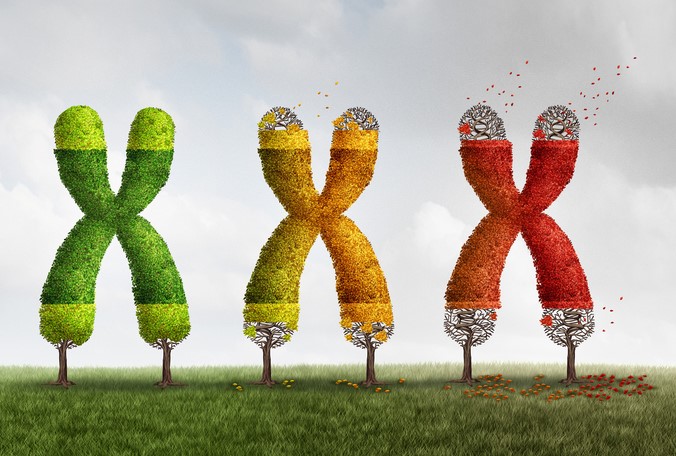
Imagine looking at a photograph of yourself from ten years ago. You might notice a few fewer gray hairs or slightly smoother skin. But beneath the surface, a much more profound countdown has been ticking away inside your cells.
In my ten years of working as a health writer and collaborating with anti-aging researchers, I’ve sat with countless clients who ask the same fundamental question: “Is there a master switch for aging?” They point to their wrinkles or their slowing metabolism, thinking that’s where aging lives. But I always tell them what the latest cellular biology confirms: the real story of how we age is written at the very tips of our DNA.
If you want to understand how well you are going to age—and how to live a longer, more vibrant life—you need to understand telomere health.
What Are Telomeres? The Aglets of Your DNA
To understand telomeres, we need to take a quick trip back to high school biology, but I promise there won’t be a quiz.
Inside nearly every cell in your body, your DNA is tightly packed into structures called chromosomes. These chromosomes carry all your genetic information. Every time your cells divide to heal a wound, grow hair, or just keep you alive, those chromosomes must be copied perfectly.
The Shoelace Analogy
Here is how I always explain it to my clients: Think of your chromosomes as a pair of shoelaces. If you look at the very ends of a shoelace, you’ll find a small plastic tip called an aglet. That aglet is there for one reason: to keep the shoelace from fraying and unraveling.
Telomeres are the biological aglets of your DNA.
They are repetitive sequences of non-coding DNA ($TTAGGG$) sitting at the ends of your chromosomes. They don’t carry the blueprint for your eye color or your height; their sole job is to shield your vital genetic data from getting damaged during cell division.
Cellular Aging: The Biological Clock is Ticking
Every time a cell divides, a tiny bit of that telomere tip is lost. This is known as the End Replication Problem. Because our cellular machinery cannot copy a strand of DNA all the way to the very end, the telomere gets shorter and shorter with each lifecycle.
The Hayflick Limit
Eventually, after about 50 to 70 divisions, the telomeres become critically short. When they reach this tipping point, the cell hits what scientists call the Hayflick Limit.
Instead of dividing again, the cell enters a state called cellular senescence. It becomes a “zombie cell”—it doesn’t die, but it stops functioning properly and begins secreting inflammatory molecules that damage surrounding tissues. This process is a major driver of biological aging and age-related diseases.
Why Telomere Health Matters for Your Longevity
When we talk about longevity, we have to distinguish between chronological age (the number of birthdays you’ve celebrated) and biological age (how old your cells actually are). Telomere length is one of the most accurate biomarkers we have for biological age.
Longer Telomeres = Vibrant, Functioning Cells = Younger Biological Age
Shorter Telomeres = Senescent "Zombie" Cells = Older Biological Age
During my time analyzing clinical data for wellness clinics, I’ve seen 40-year-olds with the telomere length of a 60-year-old, and vice versa. Shorter telomeres are heavily linked to:
-
Accelerated skin aging and hair loss
-
Cardiovascular decline
-
A weakened immune system (immunosenescence)
-
Higher risks of metabolic syndromes
The good news? Your biological age is not entirely set in stone.
Enter Telomerase: The Cellular Fountain of Youth?
If cells lose telomere length every time they divide, why don’t we run out of telomeres before we are even born? The answer lies in an enzyme called telomerase.
Discovered by Nobel Prize-winning scientists, telomerase is a specialized protein that can actually add DNA back onto the ends of chromosomes, effectively lengthening them.
While telomerase is highly active in our reproductive cells and stem cells, it is mostly switched off in our regular adult body cells (somatic cells). Activating telomerase naturally is the holy grail of modern anti-aging medicine, but it requires a delicate balance.
⚠️ A Hidden Warning from the Lab:
While we want healthy telomeres, overactivating telomerase indiscriminately can be dangerous. Cancer cells are notorious for hijacking telomerase to become “immortal,” allowing tumors to grow unchecked. Therefore, the goal is never to artificially flood the body with unregulated telomerase boosters, but rather to support natural telomere health through lifestyle modifications.
Practical Strategies to Protect and Maintain Telomere Health
You cannot change your genetics, but you have immense control over your epigenetics—how your environment influences your genes. Over the past decade, I have reviewed dozens of studies showing that specific lifestyle shifts can significantly slow down telomere shortening.
1. Master Your Chronic Stress
Chronic psychological stress releases high levels of cortisol and adrenaline. Research pioneered by Dr. Elizabeth Blackburn shows that women under high chronic stress have significantly shorter telomeres—equivalent to roughly 10 years of additional biological aging.
-
Action Step: Incorporate just 10 minutes of daily mindfulness meditation or deep-breathing exercises to lower your nervous system’s stress response.
2. Prioritize High-Quality, Deep Sleep
Your body repairs its DNA while you sleep. A consistent lack of sleep increases oxidative stress, which acts like acid on your telomeres.
-
Action Step: Aim for 7-9 hours of sleep per night. Keep your bedroom entirely dark and cool to maximize melatonin production, which is a powerful natural antioxidant.
3. Move Your Body (But Don’t Overdo It)
Moderate aerobic exercise is one of the most effective ways to boost telomerase activity naturally. Endurance runners and regular fitness enthusiasts consistently show longer telomeres than sedentary individuals.
-
Action Step: Aim for 150 minutes of moderate-intensity exercise (like brisk walking, cycling, or swimming) per week, combined with two days of resistance training.
4. Eat a Telomere-Friendly Diet
Inflammation accelerates telomere decay. A diet rich in antioxidants helps neutralize the free radicals that attack your chromosome tips.
-
Action Step: Base your meals on a Mediterranean-style diet. Load up on leafy greens, berries, wild-caught salmon (for omega-3 fatty acids), and extra virgin olive oil.
Pro Tips for Your Longevity Journey
💡 Pro Tip: Test, Don’t Guess
If you are serious about tracking your cellular aging, you can now order commercial telomere length testing kits (usually using a method called qPCR or TAT). While these tests shouldn’t be treated as absolute medical diagnoses, they can serve as an excellent baseline to see if your current diet and lifestyle choices are working in favor of your biological youth.
Summary: The Power is in Your Hands
Telomeres are not just passive clocks ticking down our lives; they are dynamic structures that respond directly to how we treat our minds and bodies. While we cannot stop time chronologically, we possess the lifestyle tools to protect our cellular aglets, support our telomere health, and extend our healthspan—the period of life spent free from chronic disease.
The small choices you make today—choosing a colorful salad over processed food, going for a walk, or managing your anger—are decoded by your chromosomes as signals to protect your genetic youth.
What is one small change you are going to make today to protect your cellular health? Have you ever considered getting your biological age tested? Let’s spark a conversation in the comments below—I’d love to hear your thoughts and answer your questions!