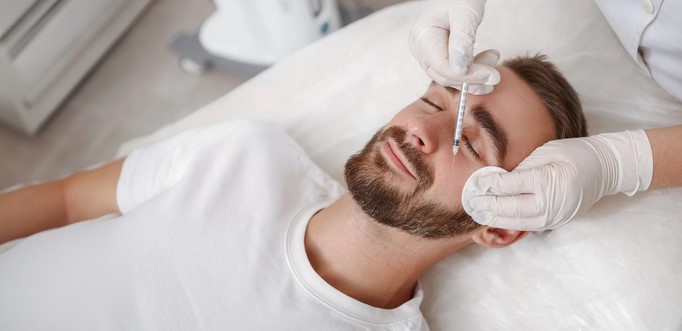
You’re standing in front of the bathroom mirror, pulling the skin near your temples back just a fraction of an inch. You’re tracking that one stubborn “11” line between your brows that seems to stay even when you’re smiling, or perhaps you’re noticing that your favorite lipstick is starting to bleed into tiny vertical lines on your upper lip. You aren’t looking for a “new face,” you just want to look as refreshed as you feel after a week-long vacation.
In my twelve years as a health and aesthetics writer, I’ve seen the industry shift from “hush-hush” back-alley secrets to a multi-billion dollar mainstream phenomenon. But here is the startling truth: despite their popularity, a huge percentage of first-time patients cannot tell the difference between Botox and Fillers. I’ve sat in consultation rooms where patients asked for Botox in their lips or Fillers to stop their forehead from moving.
Entering the world of “tweakments” without a map is a recipe for a result you might regret. Today, we’re going to strip away the marketing fluff and look at the technical reality of what these needles actually do to your anatomy.
The Foundation: Understanding the Difference
The biggest hurdle for beginners is realizing that Botox and Fillers are not interchangeable; they are tools that solve two completely different architectural problems in the face.
Analogy Time: Think of your face like a bed. Over time, two things happen. First, the person sleeping in the bed tosses and turns, causing the sheets to wrinkle. Second, the mattress starts to sag and lose its stuffing.
-
Botox is like an iron that smooths out the wrinkled sheets.
-
Fillers are like adding new fluff back into the mattress to restore its shape.
Botox: The Muscle Relaxant (Neuromodulators)
When we talk about Botox and Fillers, Botox (and its cousins like Dysport or Xeomin) falls under the category of neuromodulators.
These treatments work by temporarily blocking the nerve signals to specific muscles. When the muscle can’t contract, the skin sitting on top of it can’t fold. This is why it’s the gold standard for dynamic wrinkles—the lines that appear when you express yourself, like crow’s feet or forehead furrows.
Technical Insight: The Units vs. Areas Debate
In my experience, patients often get confused by pricing. Botox is typically sold by the Unit, not by the area. A “frozen” look usually happens when too many units are used in a single spot, or when the injector ignores the antagonist muscles. A skilled injector knows that if you relax the forehead too much without balancing the brow-lifters, your eyelids might feel heavy or “hooded.”
Dermal Fillers: The Volume Restorers
While Botox handles movement, Fillers handle structure. Most modern fillers are made of Hyaluronic Acid (HA), a sugar molecule that occurs naturally in your skin and can hold up to 1,000 times its weight in water.
We use fillers to address static wrinkles (lines that are there even when your face is at rest) and to replace lost fat pads in the cheeks, temples, and jawline. Because HA is natural, your body eventually breaks it down, which is why these treatments aren’t permanent.
The Science of “G-Prime”
In the industry, we talk about a filler’s G-Prime. This is a measure of the gel’s hardness. A high G-Prime filler is “stiff” and acts like a bone substitute for sharp jawlines. A low G-Prime filler is “soft” and fluid, perfect for the delicate skin under the eyes or for subtle lip hydration. If an injector uses a high G-Prime filler in your lips, they’ll end up feeling like hard sausages—definitely not the goal.
Scannable Checklist: Which One Do You Need?
If you’re trying to decide between Botox and Fillers, look at your specific concern:
-
Concern: Forehead lines or Crow’s feet. -> Solution: Botox. (Relaxes the muscle causing the crease).
-
Concern: Deep hollows under the eyes. -> Solution: Fillers. (Adds volume to bridge the gap).
-
Concern: Thinning lips. -> Solution: Fillers. (Physically plumps the tissue).
-
Concern: Downward-turned mouth corners. -> Solution: Often a combination. (Botox to relax the “pull-down” muscle and Filler to support the corner).
Expert Advice: Insights from a Decade in the Field
I have interviewed dozens of board-certified dermatologists and plastic surgeons, and the advice remains consistent: your injector’s eye is more important than the brand of the product.
Tips Pro: The “Pre-Juve” Strategy
There is a trend called “Preventative Botox.” The idea is to start small doses before a wrinkle becomes “etched” into the skin. If you can see a faint line when your face is totally relaxed, that’s usually the time to start. Once a wrinkle is deep enough that it looks like a scar, Botox alone won’t fix it; you’ll need laser resurfacing or fillers to “fill” the crack.
Safety and Longevity: What to Expect
-
Botox Results: Take 5 to 14 days to fully kick in. It typically lasts 3 to 4 months.
-
Filler Results: Are instant, though you will have swelling for about 48–72 hours. It can last anywhere from 6 to 18 months depending on the area.
-
Downtime: Both are “lunchtime procedures.” You might have small bruises, but you can usually go back to work. However, avoid heavy exercise for 24 hours to prevent the product from migrating or increasing swelling.
The Psychological Component: Avoid “Face Blindness”
One phenomenon I’ve observed is “filler fatigue” or “perception drift.” When you look at your face every day, you stop seeing the changes. You get one syringe of filler, love it, and then three months later, you think it’s “gone” and want more.
In reality, the filler is still there; you’ve just gotten used to your new look. This is how “Pillow Face” happens. A great injector will sometimes tell you “No,” and that is the injector you want to keep for life.
Conclusion: Empower Your Aesthetics Journey
Deciding to explore Botox and Fillers is a personal choice that should be rooted in self-care, not external pressure. When done correctly, these treatments shouldn’t make you look like a different person; they should make you look like you’ve had the best sleep of your life.
Do your research, choose a medical professional (not just a “med-spa” with a good Instagram), and start slow. The goal of modern aesthetics is for people to notice you look great, without ever realizing you’ve had “work” done.
Are you leaning more toward smoothing lines or restoring volume? Or do you have a question about the “pinch” factor of the needles? Let’s chat in the comments—I’m here to help you navigate the world of needles and nerves!