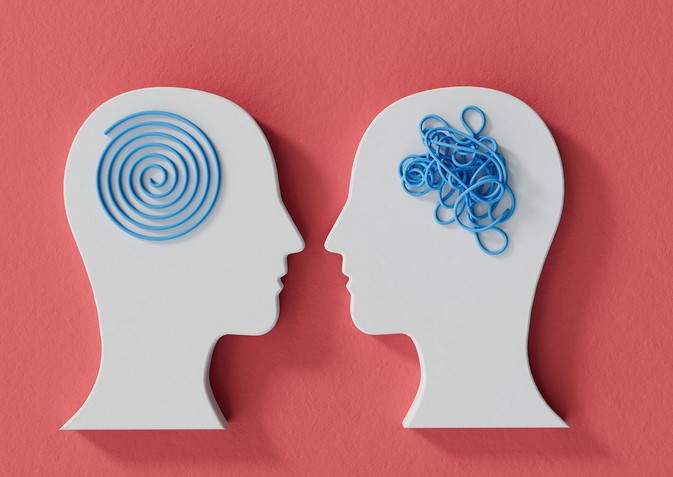
Imagine you are standing on a shoreline. For most people, the waves of emotion come in and out predictably—a splash of joy here, a ripple of sadness there. But for someone living with Mood Disorders, it feels like being tethered to a buoy in the middle of a hurricane. One moment you are thrust into the blinding light of a manic peak, and the next, you are dragged into a crushing, silent trench where the very idea of “hope” feels like a foreign language.
In my decade of writing for health clinics and interviewing psychiatric pioneers, I’ve learned that these conditions are not “character flaws” or “bad days.” They are complex physiological events. I remember a young man named Leo who told me, “I don’t want to be ‘happy’—I just want the weather inside my head to stop changing so violently.”
That conversation stayed with me because it highlights the true goal of treatment. Managing Mood Disorders isn’t about forced positivity; it’s about finding stability. Today, we’re going to look at the science, the strategies, and the personal shifts required to calm the storm and reclaim your emotional baseline.
1. The “Thermostat” Analogy: What is a Mood Disorder?
To understand how to manage your emotions, you have to understand the hardware. Think of your brain’s emotional regulation system like a household thermostat.
In a healthy system, if the “room” gets too cold (sadness), the heater kicks on. If it gets too hot (excitement), the AC brings it back to room temperature. When you live with Mood Disorders, the thermostat is broken. It might get stuck at 100°F (Mania or Hypomania) or plummet to 30°F (Major Depressive Disorder) regardless of what’s happening in the outside world.
The Biological “Spark”
This isn’t just “all in your head.” From a technical perspective, we are looking at a dysregulation of Neurotransmitters—the chemical messengers like Serotonin, Dopamine, and Norepinephrine. When these chemicals aren’t firing correctly, the “thermostat” loses its ability to regulate, leading to the highs and lows of Bipolar Disorder or the persistent heaviness of Dysthymia.
2. The Multi-Pillar Approach to Emotional Stability
In my ten years in the field, I’ve never seen a “magic bullet” for mental health. The most successful approaches are always multi-modal. You have to attack the disorder from the biological, psychological, and lifestyle angles simultaneously.
Pharmacological Intervention: The Chemical Floor
For many, medication is the “floor” that prevents them from falling into the basement.
-
Selective Serotonin Reuptake Inhibitors (SSRIs): These help keep more serotonin available in the brain to improve mood and sleep.
-
Mood Stabilizers: Often used for Bipolar Disorder to prevent the “highs” from becoming dangerous and the “lows” from becoming debilitating.
-
Insight: I’ve seen many patients quit their meds because they “feel better.” Pro Tip: Feeling better is proof the medication is working, not proof that you no longer need it. Always consult your provider before adjusting your “chemical floor.”
Psychotherapy: Rewiring the Software
While medication handles the hardware, therapy handles the software.
-
Cognitive Behavioral Therapy (CBT): This helps you identify “cognitive distortions”—those sneaky, lying thoughts that tell you “nothing will ever get better.”
-
Dialectical Behavior Therapy (DBT): Excellent for those who experience intense emotional volatility, focusing on Mindfulness and Distress Tolerance.
3. Lifestyle Architecture: Building a “Protective Shield”
If your brain is already struggling to regulate itself, your daily habits can either be a “shield” or a “trigger.” During my observations, I’ve seen that Mood Disorders are incredibly sensitive to circadian disruptions.
-
Sleep Hygiene: Sleep deprivation is the number one trigger for manic episodes. Keeping a strict wake/sleep cycle is a non-negotiable part of Managing Mood Disorders.
-
Nutritional Neuroscience: Avoiding spikes and crashes in blood sugar is vital. A diet rich in Omega-3 fatty acids (found in salmon or walnuts) has been technically shown to support brain cell membrane health.
-
Exercise as an Anchor: Cardiovascular exercise increases BDNF (Brain-Derived Neurotrophic Factor), which acts like “Miracle-Gro” for your brain cells, helping them repair and form new connections.
💡 Pro Tip: The “Early Warning System”
Start keeping a Mood Journal. Often, a shift in mood is preceded by subtle changes: a sudden burst of late-night cleaning, a change in appetite, or “pressured speech.” If you can catch the “flicker” before the “fire,” you can adjust your strategy (and call your doctor) before a full-blown episode takes hold.
4. The Social Connection: Moving Beyond Isolation
Depression wants you alone. Mania wants you impulsive. Both of these states thrive in isolation. One of the most effective Mood Disorders approaches involves building a “Support Architecture.”
-
Psychoeducation: Teaching your friends and family what your symptoms look like so they can help you spot them.
-
Peer Support Groups: There is a profound healing in realizing that your “weird” thoughts are actually common symptoms of your condition.
-
Professional Boundaries: Learning to say “no” to high-stress commitments that threaten your emotional equilibrium.
5. Navigating the “Bipolar Spectrum” and Co-Occurring Conditions
It is rare for a mood disorder to travel alone. In my decade of writing, I’ve found that many people also struggle with Comorbidities like anxiety or ADHD.
Managing Mood Disorders effectively requires a clinician who looks at the whole picture. If you treat the depression but ignore the underlying anxiety, the “storm” will keep returning. This is why a comprehensive Psychiatric Evaluation is the first step for any beginner—it ensures you are treating the right “weather pattern.”
The “Self-Medication” Trap
A hidden warning I always share: Be extremely wary of using alcohol or substances to “dampen” the intensity of your mood.
The Danger: Alcohol is a central nervous system depressant. While it might help you sleep or “numb” a manic high in the short term, it creates a “rebound effect” that makes the next low much deeper and the next high more unstable. It also interferes with the efficacy of nearly all psychiatric medications. You cannot stabilize a thermostat by pouring gasoline on it.
6. LSI Keywords for Deeper Context
For those navigating this niche, mastering these terms will help you communicate better with your healthcare team:
-
Anhedonia: The inability to feel pleasure in things you once loved.
-
Rapid Cycling: Experiencing four or more mood episodes within a year.
-
Euthymia: A normal, non-depressed, reasonably positive state of mind.
-
Neuroplasticity: The brain’s ability to reorganize itself by forming new neural connections throughout life.
Summary: Building Your Resilient Future
Managing Mood Disorders is not about achieving a state of “perfection.” It is about narrowing the gap between the peaks and the valleys. It’s about building a life where your emotions inform you, but they no longer control you.
By combining the right Pharmacological support with Cognitive tools and a rock-solid Routine, you are doing the hard work of “fixing the thermostat.” It takes time, and there will be setbacks, but the goal—emotional well-being—is worth every ounce of effort.
What does your “Green Zone” look like?
When your mood is stable and you feel like yourself, what are you doing? Who are you with? Understanding your “stable self” is the first step toward getting back there.
I’d love to hear from you: What is the one small habit that helps you stay grounded when the “internal weather” starts to shift? Or, if you’re just starting your journey, what is the biggest question you have about finding the right support?
Drop a comment below—let’s talk about building a more stable, supportive world together!