Cardiopulmonary resuscitation (CPR) is one of the most essential life-saving techniques that everyone should learn. CPR is a skill that can help save lives in emergency situations where a person’s heart has stopped beating, or they have stopped breathing. Whether you are a concerned parent, teacher, or professional in the workplace, knowing CPR training basics could be the difference between life and death in critical situations. This article provides an overview of CPR, the basic steps involved, and the importance of learning this life-saving skill.
What is CPR and Why is it Important?
CPR is a series of emergency procedures performed to restore blood circulation and breathing in someone who has suffered cardiac arrest. The goal is to maintain oxygen flow to the brain and vital organs until medical professionals arrive on the scene. When someone experiences cardiac arrest, every second counts. Immediate CPR can significantly increase the chances of survival, as it helps maintain the flow of oxygenated blood to vital organs, preventing brain damage and death.
Every year, thousands of people experience cardiac arrest outside of hospitals, often in public spaces or at home. Sadly, many of these individuals do not survive because bystanders fail to take action due to a lack of CPR knowledge. This highlights the critical need for CPR training in communities everywhere.
The Basic Steps of CPR
Understanding CPR training basics can help you respond quickly and effectively in an emergency situation. Here’s a breakdown of the essential steps involved in performing CPR.
1. Check for Responsiveness and Call for Help
The first step in CPR is to determine whether the person is unresponsive. If someone collapses and is not breathing or is only gasping, immediately check for a pulse by placing two fingers on their neck (carotid artery) or wrist (radial artery). If you cannot detect a pulse within 10 seconds, call for emergency help. Dial your country’s emergency number (e.g., 911 in the U.S.) and let them know the situation. Early intervention is crucial in improving the chance of survival.
If you are in a public place and there are other people nearby, ask someone to call for help and get an automated external defibrillator (AED), if available. An AED is a portable device that can administer an electric shock to the heart to restore a normal rhythm, and it is often found in places like gyms, airports, and office buildings.
2. Start Chest Compressions
Once you’ve called for help, begin chest compressions as quickly as possible. Position the person on their back on a firm surface. Kneel beside them, place the heel of one hand on the center of their chest (just below the breastbone), and place your other hand on top of the first. Interlace your fingers to keep both hands in place.
Using your body weight, push hard and fast at a depth of about 2 inches (5 cm) at a rate of 100 to 120 compressions per minute. Think of it as performing chest compressions to the beat of the song “Stayin’ Alive” by the Bee Gees—this rhythm can help you maintain the correct pace.
Chest compressions are essential because they pump blood to the brain and heart, keeping the body’s organs supplied with oxygen until more advanced medical help arrives. This can make all the difference in preventing brain damage or death.
3. Provide Rescue Breaths (If Trained)
In addition to chest compressions, rescue breaths are also an important part of CPR. However, if you are not trained in giving rescue breaths or feel uncomfortable doing so, continuing with chest compressions alone can still significantly help.
If you are trained in CPR and comfortable with performing rescue breaths, you can give two breaths after every 30 chest compressions. To give a rescue breath:
- Open the person’s airway by tilting their head back and lifting their chin.
- Pinch the person’s nose shut and seal your mouth over theirs.
- Give two breaths, ensuring that the chest rises with each breath.
Each breath should last about one second, and you should avoid giving forceful or overly large breaths. After providing two rescue breaths, immediately resume chest compressions.
4. Use an AED (If Available)
If an AED is available, it is crucial to use it as soon as possible. The AED is a machine that analyzes the person’s heart rhythm and, if necessary, delivers an electric shock to restore a normal heartbeat.
To use an AED:
- Turn the device on and follow the voice prompts.
- Attach the electrode pads to the person’s chest as indicated by the device.
- The AED will analyze the heart rhythm and determine if a shock is needed.
- If the device advises a shock, press the shock button, and the AED will deliver the shock.
- After the shock is delivered, continue with chest compressions and follow the AED’s instructions.
Using an AED can greatly improve survival rates, particularly if the cardiac arrest is caused by an arrhythmia. It is safe to use an AED, as the machine provides clear instructions, and it will only administer a shock if needed.
The Importance of CPR Training
CPR is a skill that everyone should learn, as it can be used in a variety of emergency situations. However, just knowing the steps is not enough. CPR training provides you with the confidence and expertise needed to perform the technique correctly when faced with a real emergency. Training courses teach you not only the basic steps but also the correct techniques, the importance of chest compressions, and how to assess various emergency situations.
In addition to learning CPR, many training programs also teach First Aid and the use of an AED, which are valuable skills that can save lives. CPR certification is often offered by organizations like the American Heart Association (AHA) and the Red Cross, both of which offer courses for individuals and groups, from professionals to the general public.
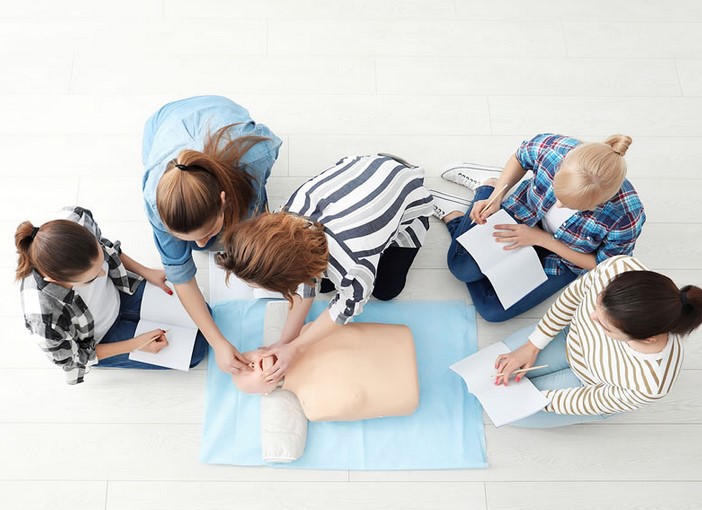
Training courses also include hands-on practice using mannequins, which allow you to practice chest compressions and rescue breaths in a safe environment. This practice is essential for building the muscle memory needed to perform CPR effectively in a real-life emergency.
In a cardiac emergency, knowing CPR training basics can save a life. Whether you’re at home, at work, or in a public space, your ability to perform CPR can make a critical difference in someone’s survival chances. CPR is a simple yet incredibly effective skill that can be learned by anyone. By taking a CPR course, you empower yourself to respond quickly and confidently in emergencies. Don’t wait—take action and get trained today to help ensure that you’re ready to save a life when it matters most.