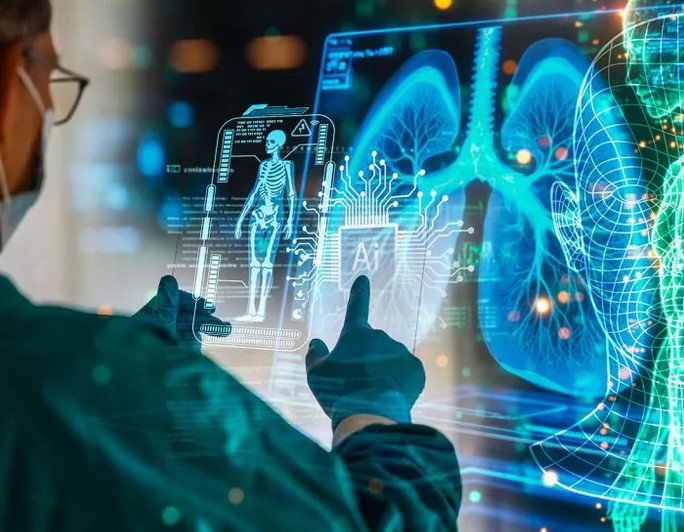
AI-Powered Diagnostics: The Future of Healthcare Technology

Source:https://images.forbesindia.com

Imagine a world-class radiologist who never sleeps, never gets distracted by a morning headache, and has memorized every medical image ever taken in human history. Now, imagine that this expert can “see” a tumor the size of a grain of sand buried deep within a complex lung scan in less than a second. This isn’t science fiction; it’s the reality of modern triage in some of our most advanced hospitals today.

In my decade of covering health tech, I’ve sat in labs where “early detection” used to mean months of waiting and uncertainty. I remember speaking with a technician in 2016 who spent hours manually circling suspicious shadows on X-rays. Fast forward to 2026, and I’ve watched that same process happen near-instantaneously through AI-Powered Diagnostics.

The shift isn’t just about speed; it’s about shifting our entire healthcare philosophy from “reactive” (fixing what is broken) to “predictive” (preventing the break). Let’s peel back the curtain on how artificial intelligence is becoming the most important tool in a doctor’s kit.

1. The “Extra Set of Eyes” Analogy: How AI Actually Works

To understand AI-Powered Diagnostics, we have to move past the “Terminator” Hollywood tropes. In the clinic, AI doesn’t act like a robot doctor; it acts like a high-powered magnifying glass with a memory.

Think of a “Where’s Waldo?” book. A human might take a few minutes to find Waldo because our eyes get tired and the red-and-white stripes start to blur. An AI system, however, has been trained on billions of pictures of Waldo. It doesn’t “look” at the page; it mathematically identifies the specific pattern of Waldo’s shirt instantly.

In medical terms, this is called Computer-Aided Detection (CAD). Whether it’s a skin lesion, a retinal scan, or a complex MRI, the AI is looking for patterns that are too subtle for the human eye to consistently catch.

2. The Pillars of AI-Powered Diagnostics in 2026

We are seeing AI impact three major “theaters” of healthcare. Understanding these will help you navigate the next time you visit a specialist.

A. Medical Imaging and Radiology

This is the “gold standard” for AI-Powered Diagnostics. By using Deep Learning algorithms, software can now analyze CT scans for signs of stroke or hemorrhage with higher accuracy than an exhausted resident on a 24-hour shift.

  • The Goal: Reducing the “Time to Treatment.”

  • LSI Term: This often utilizes Convolutional Neural Networks (CNNs), a specific type of AI designed to process visual data.

B. Pathology and Lab Results

Traditionally, a pathologist looks at tissue samples under a microscope. It’s slow and subjective. Today, digital pathology platforms use AI to count cancerous cells and grade their aggressiveness. This leads to Precision Medicine, where your treatment is tailored to the exact “fingerprint” of your disease.

C. Predictive Analytics and Wearables

The fitness tracker on your wrist is now a diagnostic tool. By monitoring Heart Rate Variability (HRV) and sleep patterns, AI can predict if you are getting sick days before you feel a single symptom. This is the “smoke detector” of the human body.

3. Beyond the Hype: The Human-AI Partnership

I often hear the concern: “Will AI replace my doctor?” In my 10 years in this field, I’ve seen the exact opposite. AI is a liberator.

When AI handles the mundane task of sorting through thousands of normal “healthy” scans, it frees up the doctor to focus on the complex, edge-case patients who need human intuition. We call this Augmented Intelligence. The AI provides the data; the doctor provides the empathy, the context, and the final decision.

💡 Pro Tip: The “Second Opinion” Strategy

If you are ever faced with a complex diagnosis based on imaging (like a biopsy or an MRI), don’t be afraid to ask: “Was this scan processed through an AI triage system?” Many modern clinics use AI to flag “high-priority” results. Knowing that your case was dual-verified by both a human and an algorithm can provide an extra layer of peace of mind.

4. Addressing the “Black Box” Problem and Algorithmic Bias

We have to be honest about the hurdles. One of the biggest challenges in AI-Powered Diagnostics is what we call the “Black Box” Problem. Sometimes, an AI can tell that a patient is sick, but it can’t explain why it reached that conclusion.

Furthermore, if an AI is trained only on data from one specific demographic, it might struggle to accurately diagnose people of different ethnicities or ages. This is why Data Diversity is the hottest topic in health tech right now. We are working hard to ensure that the “Future of Healthcare” is a future that works for everyone, regardless of their background.

5. The Technical Edge: Natural Language Processing (NLP)

It’s not just about images. A huge part of AI-Powered Diagnostics involves Natural Language Processing (NLP). This technology “reads” through millions of disorganized medical records, doctor’s notes, and lab reports to find hidden connections.

For example, an NLP system might notice that five different patients who all saw different doctors are exhibiting a rare combination of symptoms after taking the same medication. This helps us catch Adverse Drug Reactions and rare diseases months—or even years—sooner than we previously could.

6. The Future: From Clinics to Your Kitchen Table

Within the next few years, I predict we will see AI-Powered Diagnostics move from the hospital into the home. We are already seeing “Smart Toilets” that analyze waste for signs of kidney issues and smartphone apps that can detect anemia just by looking at a photo of your fingernails.

This democratization of data means that you won’t have to wait for an annual checkup to know if something is wrong. You will have a “Digital Health Guardian” watching over you 24/7.


 The Rise of “Cyberchondria”

Here is a “Hidden Warning” from someone who has seen the data: More data does not always mean more health.

The Danger: As diagnostic tools become available on our phones, there is a risk of “Cyberchondria”—the anxiety caused by misinterpreting AI-generated “risk scores.” An AI might tell you that you have a “3% increased risk” for a condition, which sounds scary but is statistically insignificant.

Expert Advice: Never use a consumer-grade AI app to self-diagnose. Use it as a conversation starter with a qualified medical professional. The tool is meant to facilitate a doctor’s visit, not replace it.


Summary: A New Era of Hope

AI-Powered Diagnostics is the bridge between our current “wait and see” healthcare system and a future where diseases are caught before they ever cause pain. By combining the cold, hard calculating power of machine learning with the warm, experienced intuition of human doctors, we are entering a golden age of longevity.

We are moving toward a world where a “late-stage” diagnosis becomes a relic of the past. It is an inspiriting time to be involved in health, and an even better time to be a patient.

Are you ready to trust the algorithm?

Technology is moving faster than our comfort levels sometimes allow. Some find the idea of a machine analyzing their body terrifying, while others find it liberating.

I want to hear from you: If a highly accurate AI told you that you were likely to develop a condition in five years, would you want to know? Or do you prefer the traditional “wait for symptoms” approach? Drop a comment below and let’s discuss the ethics of this digital frontier!
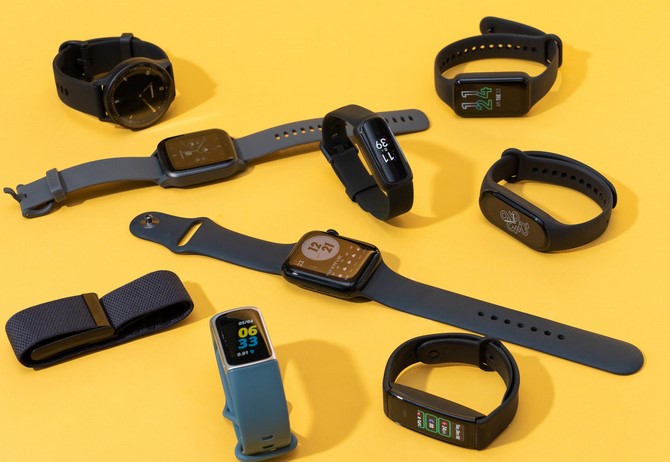
Choosing the Best Digital Fitness Trackers for Your Health Goals

Source:https://cdn.thewirecutter.com

Imagine standing in the electronics aisle, staring at a wall of sleek, glowing wristbands. One promises to read your stress levels, another claims to track your REM sleep, and a third insists it can predict your recovery time after a workout. You check your phone, only to see an ad for a smart ring that does it all without a screen. It’s overwhelming, isn’t it? You just wanted to move a bit more, but now you feel like you need a PhD in data science just to buy a watch.

In my twelve years as a health writer and fitness tech consultant, I have strapped nearly a hundred different Digital Fitness Trackers to my wrists, fingers, and chest straps. I’ve seen the industry evolve from simple pedometers that counted “steps” (even when you were just waving your hand) to sophisticated biometric laboratories that live on your skin.

What I’ve learned is a truth the marketing teams won’t tell you: The most expensive tracker is not the best one. The “best” tracker is the one that actually changes your behavior without making you feel like a slave to the data. Let’s cut through the noise and find the right tool for your specific journey.

1. The “Dashboard” Analogy: Why We Use Fitness Tech

Think of your body as a high-performance vehicle. You can drive it without a dashboard—you’ll still get where you’re going—but you won’t know if your engine is overheating or if you’re about to run out of fuel.

Digital Fitness Trackers serve as your body’s dashboard. They don’t do the “driving” (the exercise) for you, but they provide the real-time feedback—like Heart Rate Variability (HRV) or oxygen saturation (SpO2)—that tells you when to push harder and when to pull over for a rest.

2. Matching the Tracker to Your Unique Archetype

Before looking at brands, you must identify your goal. In my experience, most users fall into three categories. Matching your tracker to your “type” prevents you from overpaying for features you will never use.

The Lifestyle Optimizer (Beginner)

If your goal is general wellness—hitting 10,000 steps, improving sleep quality, and managing stress—you don’t need a $600 sapphire-glass sports watch.

  • Focus: Step counting, basic sleep stages, and Sedentary Reminders.

  • Best Fit: Sleek, lightweight bands like the Fitbit Luxe or the Xiaomi Mi Band series. These are “set it and forget it” devices.

The Performance Athlete (Intermediate)

If you are training for a 10K, a triathlon, or a powerlifting meet, you need accuracy in the high-intensity zones.

  • Focus: VO2 Max estimation, GPS accuracy for pace/distance, and recovery metrics.

  • Best Fit: Brands like Garmin or Polar. These devices prioritize Optical Heart Rate (OHR) sensors that can handle the sweat and movement of a vigorous workout.

The Health Monitor (Metric-Focused)

Perhaps you are managing a condition like hypertension or simply want to dive deep into your longevity markers.

  • Focus: ECG (Electrocardiogram) capabilities, blood pressure trends, and skin temperature.

  • Best Fit: The Apple Watch Series or the Oura Ring. These devices lean heavily into medical-grade sensors and lifestyle integration.

3. The Technical Pillars: What’s Under the Hood?

When you read a spec sheet for Digital Fitness Trackers, certain terms act as a seal of quality. If a device doesn’t mention these, proceed with caution.

  • PPG (Photoplethysmography): This is the green light on the back of your tracker. It measures blood flow to determine your heart rate. Higher-end trackers use multiple green and infrared lights for better accuracy across different skin tones.

  • 3-Axis Accelerometer: This determines movement. It’s the reason your watch knows you’re walking and not just brushing your teeth.

  • Bioimpedance Sensors: Often found in high-end scales or advanced wearables, these measure body composition or skin conductance to track stress (EDAs).

4. The “Sleep Data” Trap: Accuracy vs. Insight

One observation I’ve made over the years is that people get obsessed with their “Sleep Score.” I once worked with a client who became so anxious about her “Poor” sleep score on her tracker that the anxiety actually caused her to sleep worse the following night.

Insight: Most wrist-based Digital Fitness Trackers are excellent at detecting when you are asleep, but they are only about 60-70% accurate at distinguishing between Deep Sleep and REM sleep compared to a clinical sleep study.

Use sleep data as a trend, not a gospel. If your “Deep Sleep” is consistently low, look at your caffeine intake or screen time—don’t panic over a single night’s data.

💡 Pro Tip: The “Wrist Swap” for Accuracy

If you have a smaller wrist or a lot of wrist hair, the optical sensor might struggle to get a clear reading during high-intensity exercise. To improve accuracy without buying a chest strap, try sliding the tracker two finger-widths above your wrist bone (further up your forearm) and tightening it slightly. This flatter, fleshier area provides a much cleaner signal for the sensors.

5. Ecosystem and Battery Life: The Invisible Constraints

A tracker is only useful if it’s on your wrist. If you have to charge your watch every single night (like some high-end smartwatches), you will eventually miss your sleep data.

  • Smartwatch (1-2 day battery): Great for replying to texts and taking calls, but annoying for 24/7 health tracking.

  • Fitness Band (5-10 day battery): The “sweet spot” for most users.

  • Smart Ring (4-7 day battery): Excellent for those who hate wearing watches but want 24/7 biometric monitoring.

Consider your “Ecosystem.” If you use an iPhone, an Apple Watch offers seamless integration. If you are an Android enthusiast, Google-integrated Fitbits or Garmin’s robust app might feel more intuitive.

6. The Psychological Impact: Gamification and Burnout

The dark side of Digital Fitness Trackers is the “streak.” Closing your rings or hitting your step goal for 100 days straight feels amazing—until you get the flu.

I’ve seen many beginners give up on their health journey entirely because they “broke their streak.” It’s vital to choose a tracker that allows for Rest Days. Some newer devices now include a “Readiness Score” that actually tells you to take it easy if your HRV is low. This is a massive leap forward in preventing burnout.

Data Privacy and Your Health

Here is a “Hidden Warning” that many users ignore in the excitement of a new gadget: You are the product.

Many “cheap” or off-brand Digital Fitness Trackers make their money by selling your biometric data to third-party advertisers or insurance aggregators. Before you sync your most intimate health data, check the privacy policy. Stick to reputable brands that allow you to opt out of data sharing. Your heart rate and sleep patterns are private—keep them that way.

Summary: Designing Your Digital Health Partner

Choosing between the various Digital Fitness Trackers isn’t about finding the one with the most “stuff.” it’s about finding the one that speaks your language.

If you love data and graphs, get a Garmin. If you want a stylish accessory that helps you sleep better, get an Oura Ring or a Fitbit. If you want a personal assistant on your wrist that also happens to track your runs, the Apple Watch is your winner.

At the end of the day, no piece of technology can replace the “felt sense” of your own body. Use these tools to validate what you feel, but never let a “Red” score on a screen tell you that you didn’t have a good day.

What’s your “Must-Have” feature?

When you look at your wrist (atau jari), what is the one piece of information you can’t live without? For me, it’s my Resting Heart Rate—it’s my early warning system for when I’m getting sick.

I want to hear from you: Are you looking for a tracker to help you lose weight, train for a race, or just sleep better? Drop a comment below with your main goal, and I’ll help you narrow down the perfect device for your budget!