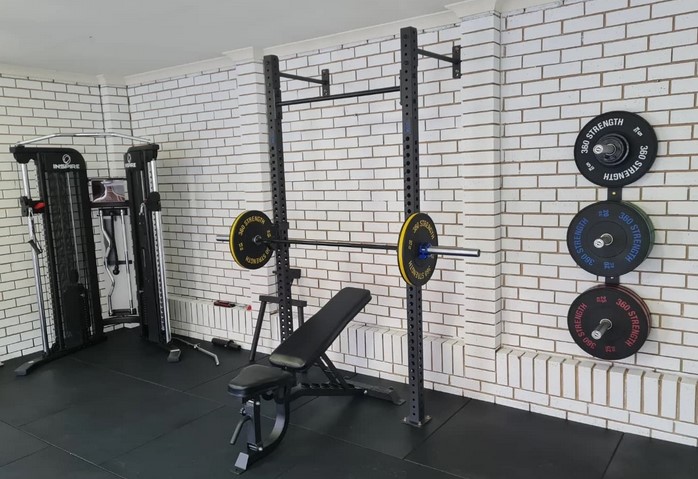
Home Gym Essentials: Must-Have Equipment for a Successful Workout

Source:https://www.littleblokefitness.com.au

It’s 6:00 PM on a rainy Monday. You’ve just finished a grueling work shift, and the thought of driving fifteen minutes to a crowded commercial gym—only to wait in line for a sweat-slicked bench—feels like a second job. You look at that dusty corner in your spare room or the empty space in your garage and think, “Could I actually get fit here?” The answer is a resounding yes. In fact, studies show that people with home setups are 33% more likely to stick to their fitness goals over a year compared to those with gym memberships alone.

In my twelve years as a health writer and fitness consultant, I’ve seen the “home gym” evolve from a single pair of rusty dumbbells into a high-performance sanctuary. I’ve personally made the mistake of buying “as-seen-on-TV” contraptions that ended up as expensive clothes hangers. What I’ve learned is that a successful home workout isn’t about having a room full of chrome machines; it’s about choosing high-utility home gym essentials that offer the most “bang for your buck” per square inch.

Building a home gym is like building a Swiss Army Knife. You don’t need a giant toolbox; you need a few high-quality tools that can do a hundred different things.

The Foundation: Why Less is Often More

The biggest trap beginners fall into is the “Complete Set” mentality. You don’t need a rack of twenty different dumbbells to see results. I’ve coached clients who transformed their physiques using nothing more than a few key items and a bit of floor space.

When you curate your home gym essentials, you are looking for Versatility, Durability, and Footprint. If a piece of equipment only does one movement (like a leg extension machine), it’s a waste of space. If it can help you squat, press, row, and lung, it’s a winner.

Analogy Time: Think of your home gym like a capsule wardrobe. Instead of fifty cheap shirts, you buy one high-quality blazer, a great pair of jeans, and a solid pair of boots. You can mix and match those few items to create dozens of outfits. Your equipment should work exactly the same way.

The “Big Three” Home Gym Essentials for Strength

If you want to build muscle and bone density—the pillars of longevity—you need resistance. Based on my decade of experience, these are the three non-negotiables.

1. Adjustable Dumbbells

Space is the ultimate currency in a home gym. A full rack of dumbbells can take up an entire wall. Adjustable versions allow you to change weights (from 5 lbs to 50 lbs or more) with the turn of a dial. This allows for progressive overload—the technical process of gradually increasing the stress on your body to force it to get stronger.

2. Resistance Bands (The “Hidden” Heavy Lifter)

Don’t be fooled by their lightweight appearance. Heavy-duty looped resistance bands provide Variable Linear Resistance. This means the further you stretch the band, the harder it gets. This mimics the natural “strength curve” of your muscles, making them incredibly effective for both strength training and mobility work. Plus, they fit in a drawer.

3. A Multi-Purpose Adjustable Bench

Training on the floor limits your range of motion. A sturdy, adjustable bench allows you to perform incline presses, seated rows, and step-ups. Look for one with a high weight capacity and “grippy” upholstery; you don’t want to be sliding around when you’re trying to push a personal best.

Cardio and Conditioning Without the Treadmill

Many people think home gym essentials must include a $2,000 treadmill. I’m here to tell you that unless you are a competitive marathon runner, you can skip the bulky cardio machines.

  • The Jump Rope: For under $20, a jump rope provides some of the highest metabolic conditioning possible. Ten minutes of jumping rope can burn as many calories as an eight-minute mile run, while improving your coordination and bone density in the feet and ankles.

  • Kettlebells: The kettlebell is a hybrid tool. It provides a brutal cardio workout through “swings” and “snatches,” while doubling as a weight for squats and presses. If I could only have one piece of equipment for the rest of my life, it would be a 16kg or 24kg kettlebell.

Scannable Checklist: Curating Your Space

If you are just starting out, use this list to prioritize your purchases:

  • High-Density Flooring: Protect your joints and your floor tiles with interlocking rubber mats.

  • Pull-Up Bar: Even if you can’t do a full pull-up yet, “dead hangs” are excellent for spinal decompression and grip strength.

  • Suspension Trainer (TRX): Uses your body weight as resistance and can be anchored to any door. Excellent for “core stability” and functional movement.

  • Foam Roller: Your “in-home” massage therapist. Essential for myofascial release and reducing post-workout soreness.

Expert Advice: Insights from the Trenches

After a decade of reviewing gear and testing setups, I’ve discovered a few “hidden truths” that will save you money and frustration.

Tips Pro: The “Mirror” Psychology

Never underestimate the power of a large wall mirror. It’s not about vanity; it’s about Biofeedback. In a home gym, you don’t have a coach to correct your form. Watching your reflection during a deadlift or a squat helps you spot “rounding” in your back or “caving” in your knees. It is the cheapest safety insurance you can buy.

The Mental Shift: Consistency Over Equipment

The most important “equipment” in your home gym isn’t something you can buy at a sporting goods store—it’s your routine.

The danger of a home gym is that it’s always there, which makes it easy to say, “I’ll just do it later.” I’ve found that the most successful home athletes have a “Trigger.” Put on your workout shoes, turn on a specific playlist, and step into your designated “fitness zone.” Treat your home workout with the same respect you would a paid appointment with a trainer.

Conclusion: Build Your Sanctuary Today

Choosing the right home gym essentials is an investment in your future self. By focusing on versatile tools like adjustable dumbbells, resistance bands, and a solid bench, you remove the barriers of time, travel, and “gym-timidation.”

You don’t need a palace; you just need a corner and the commitment to show up. Start small—perhaps with just a kettlebell and a mat—and build your sanctuary as your strength grows. The best time to start was yesterday; the second best time is right now.

Are you planning to convert a garage, a bedroom, or just a corner of your living room? What’s the one piece of equipment you absolutely can’t live without? Share your home gym dreams in the comments below—I’d love to help you optimize your layout!

Upper Body Workout Plan: Strengthen Your Arms, Shoulders, and Chest

Source : https://hips.hearstapps.com

A strong upper body is essential for not only achieving aesthetic goals but also enhancing functional movement and overall strength. Whether you’re an athlete looking to improve performance, someone who wants to boost confidence, or just interested in building a solid foundation for general health, having an effective upper body workout plan is key. Focusing on the arms, shoulders, and chest will help you develop strength and muscle tone, while also improving posture, balance, and endurance. In this article, we’ll outline a comprehensive upper body workout plan that targets these muscle groups, ensuring you get the most out of each training session.

1. Why Focus on the Upper Body?

Strengthening the upper body plays a pivotal role in enhancing overall fitness. The arms, shoulders, and chest are involved in nearly every physical activity, from lifting objects to performing daily tasks. A well-developed upper body improves not just your physical appearance but also your ability to perform activities like pushing, pulling, lifting, and carrying. Additionally, a strong upper body supports the core and lower body, helping you maintain better posture and reducing the risk of injury.

Focusing on key areas such as the arms, shoulders, and chest allows you to balance your workout routine, complementing your lower body exercises and cardio sessions. Plus, a sculpted upper body can boost your confidence, making you feel stronger and more empowered.

2. Essential Exercises for an Effective Upper Body Workout Plan

A balanced upper body workout plan should include exercises that engage the muscles of the arms (biceps, triceps), shoulders (deltoids), and chest (pectorals). Each muscle group plays a specific role in upper body strength and movement. Here are some key exercises to include in your upper body workout plan:

Arms: Biceps and Triceps

1. Bicep Curls (Dumbbell or Barbell)

  • Target muscles: Biceps (front of the upper arm)
  • How to do it: Stand with your feet hip-width apart, holding a dumbbell or barbell with your palms facing forward. Keeping your elbows close to your body, curl the weight up toward your shoulders. Slowly lower the weight back down to the starting position. Keep the movement controlled to maximize muscle engagement.

2. Tricep Dips

  • Target muscles: Triceps (back of the upper arm)
  • How to do it: Position your hands on the edge of a bench or chair, with your feet extended in front of you and your knees slightly bent. Lower your body by bending your elbows, then press back up to the starting position, engaging the triceps. Keep your back close to the bench to focus on the triceps rather than the shoulders.

Shoulders: Deltoids

3. Shoulder Press (Dumbbell or Barbell)

  • Target muscles: Deltoid muscles (front, middle, and rear shoulders)
  • How to do it: Sit or stand with a dumbbell in each hand at shoulder height, palms facing forward. Press the dumbbells overhead until your arms are fully extended. Lower the weights back down to shoulder height and repeat. This exercise works the shoulders, and adding the dumbbells allows for greater stability and range of motion.

4. Lateral Raises

  • Target muscles: Lateral deltoids (middle part of the shoulder)
  • How to do it: Stand with your feet hip-width apart, holding a light dumbbell in each hand. With a slight bend in the elbows, raise both arms out to the sides until they reach shoulder height. Slowly lower them back to the starting position. Lateral raises help develop the middle portion of the deltoid and give the shoulders a broader appearance.

Chest: Pectorals

5. Push-Ups

  • Target muscles: Pectorals, triceps, shoulders
  • How to do it: Start in a high plank position, with your hands placed slightly wider than shoulder-width apart. Lower your body toward the ground by bending your elbows, keeping your body in a straight line from head to heels. Push back up to the starting position. Push-ups are one of the best bodyweight exercises for developing overall chest strength and stability.

6. Bench Press (Barbell or Dumbbell)

  • Target muscles: Pectorals, triceps, shoulders
  • How to do it: Lie on a bench with your feet flat on the ground and a barbell or dumbbells in your hands. Lower the weight slowly toward your chest while maintaining control. Press the weight back up to the starting position. Bench presses are highly effective for building chest mass and increasing upper body strength.

3. Creating Your Upper Body Workout Plan

To see results, consistency is key. Aim to incorporate your upper body workout plan into your routine two to three times a week, allowing sufficient rest between sessions to promote muscle recovery. Here’s a sample workout plan for you to follow:

Warm-Up (5-10 minutes)

Start each workout with a dynamic warm-up to increase blood flow to the muscles and prepare your body for exercise. Consider incorporating:

  • Arm circles
  • Shoulder rolls
  • Light cardio (jump rope, brisk walking, or cycling)

Upper Body Workout Routine (3-4 Sets of 10-12 Reps Per Exercise)

  1. Bicep Curls
  2. Tricep Dips
  3. Shoulder Press
  4. Lateral Raises
  5. Push-Ups
  6. Bench Press

For an added challenge, increase the resistance as you progress, either by adding more weight or increasing the number of reps and sets. Consider using supersets (performing two exercises back-to-back with minimal rest) to intensify the workout and keep the muscles engaged for longer periods.

Cool-Down (5-10 minutes)

Finish your workout with a cool-down to help your muscles relax and recover:

  • Gentle stretching, focusing on the chest, shoulders, and arms
  • Deep breathing exercises to relax the body

In conclusion, a well-rounded upper body workout plan is essential for strengthening your arms, shoulders, and chest while promoting better posture, balance, and overall strength. By incorporating key exercises such as bicep curls, push-ups, shoulder presses, and tricep dips, you can target all the major muscle groups in the upper body. Remember to stay consistent, progressively increase the intensity of your workouts, and allow your muscles to recover between sessions. With the right approach, you’ll soon notice improvements in your strength, appearance, and overall fitness level. So, follow this upper body workout plan and enjoy the benefits of a stronger, more defined upper body.

Plank Variations for Core: Strengthen Your Core with These Exercises

Source : https://media.post.rvohealth.io

When it comes to building a strong and stable core, the plank is often regarded as one of the most effective exercises. This simple yet powerful movement targets a wide range of core muscles, including the abdominals, obliques, lower back, and even the glutes and shoulders. However, holding a traditional plank for extended periods may not be enough to continuously challenge your muscles. To truly take your core strength to the next level, incorporating plank variations for core training can provide the variety needed to activate different muscle groups and avoid plateaus. In this article, we will explore a variety of plank variations that can help you develop a more robust and functional core, enhancing your overall strength and stability.

1. The Basics of the Plank

Before diving into the various plank variations for core strengthening, it’s essential to understand the mechanics of the basic plank. The traditional plank is performed by holding a position similar to a push-up, with the body forming a straight line from head to heels. The elbows are positioned directly beneath the shoulders, and the forearms rest on the floor, keeping the core tight and engaged.

While the plank seems simple, maintaining a proper form is crucial to avoid injury and maximize the effectiveness of the exercise. Here are some tips for performing a basic plank:

  • Engage Your Core: Draw your belly button toward your spine to activate the core muscles.
  • Keep a Neutral Spine: Avoid arching or rounding your back, as this can lead to strain.
  • Activate Your Glutes and Quads: By squeezing your glutes and quads, you help support your lower back and improve overall stability.
  • Breathe: While holding the plank, continue to breathe deeply and steadily to avoid unnecessary tension.

Once you’re comfortable with the standard plank, you can start incorporating plank variations for core training to target different muscle groups and increase intensity.

2. Effective Plank Variations for Core Strengthening

Plank variations are a great way to engage your core muscles from different angles and increase the challenge of your workout. Here are some plank variations to add to your routine:

Side Plank

The side plank targets the obliques, which are the muscles responsible for rotation and lateral movement. This variation not only helps improve your core stability but also enhances balance and strength in the lower back and shoulders.

How to do it:

  1. Lie on your side with your legs extended and stacked on top of each other.
  2. Prop yourself up on your elbow, ensuring your elbow is directly beneath your shoulder.
  3. Lift your hips off the ground, forming a straight line from head to heels.
  4. Hold the position, keeping your core engaged and your body stable.
  5. Repeat on the other side.

Forearm Plank to Push-Up Plank

This dynamic variation challenges the entire core while adding an upper body component. Transitioning between a forearm plank and a push-up plank not only strengthens the core but also targets the chest, shoulders, and triceps.

How to do it:

  1. Start in a forearm plank position.
  2. Press up onto your hands, one hand at a time, until you’re in a push-up plank position.
  3. Lower back down onto your forearms one arm at a time.
  4. Continue to alternate between the two positions while maintaining core engagement.

Plank with Leg Lift

The plank with leg lift is a great variation for increasing core activation, especially in the lower abs and hip flexors. By lifting one leg at a time, you challenge the core muscles to maintain stability and control.

How to do it:

  1. Start in a standard plank position, with your body in a straight line and your core engaged.
  2. Slowly lift one leg off the floor, keeping it straight and aligned with your body.
  3. Hold for a moment, then lower your leg back down.
  4. Repeat on the other leg.
  5. Continue alternating legs, maintaining a steady pace and a stable core.

3. Advanced Plank Variations for Core Strength

Once you’ve mastered basic plank variations for core training, you may want to challenge yourself with more advanced options. These variations add complexity, requiring greater stability, strength, and coordination.

Plank with Shoulder Taps

This variation introduces an element of instability, which forces your core to work even harder to maintain balance. The shoulder tap also engages the shoulders, chest, and arms, making it a full-body movement.

How to do it:

  1. Start in a high plank position, with your hands directly under your shoulders.
  2. Keep your core tight and your body in a straight line from head to heels.
  3. Slowly lift one hand off the ground and tap the opposite shoulder.
  4. Lower your hand back down and repeat on the other side.
  5. Continue alternating shoulder taps while minimizing any swaying of the hips.

Plank to Pike

The plank to pike variation targets the core, especially the lower abs and hip flexors, while also challenging your upper body stability. This dynamic movement requires control and coordination as you shift from a plank position to a pike.

How to do it:

  1. Start in a high plank position with your hands under your shoulders and your body in a straight line.
  2. Push your hips up toward the ceiling, forming a pike position with your body.
  3. Hold the pike briefly, then lower your hips back down to the plank position.
  4. Repeat the movement, engaging your core and controlling the motion.

Walking Plank

The walking plank increases the challenge by incorporating movement while maintaining core engagement. This exercise improves stability, strength, and endurance, targeting the abs, shoulders, and arms.

How to do it:

  1. Start in a forearm plank position.
  2. Move one hand forward and place it on the ground, then bring the opposite hand forward.
  3. Continue walking your hands forward, one arm at a time, maintaining a straight body and tight core.
  4. Walk your hands back toward the starting position.
  5. Repeat for the desired amount of time or reps.

In conclusion, incorporating various plank variations for core training into your exercise routine can significantly improve your overall core strength and stability. By targeting different muscle groups and challenging your body from multiple angles, these plank variations help to enhance functional strength, posture, and endurance. Whether you’re a beginner or an advanced athlete, there are plank variations suited to every level of fitness. Regularly practicing these exercises will not only strengthen your core but also improve your athletic performance and reduce the risk of injury. So, add these plank variations for core exercises to your routine and enjoy the benefits of a stronger, more stable core.