You are stuck in gridlock traffic, already ten minutes late for a crucial presentation. Suddenly, a sleek sedan cuts you off without a blinker, forcing you to slam on your brakes. Your heart rate violently spikes, your hands grip the steering wheel until your knuckles turn white, and a wave of pure, unadulterated rage floods your chest. In that split second, you have a choice: do you lean on your horn and let the anger ruin your entire morning, or do you take a breath and reset?
If you usually choose the former, you are completely human. Over my ten years working as a health writer alongside clinical psychologists and biofeedback specialists, I have witnessed how millions of people live at the mercy of their immediate feelings.
Early in my career, I used to believe that experienced mental health professionals simply didn’t get angry or anxious. Then I spent time shadowing clinicians in high-stress psychiatric settings.
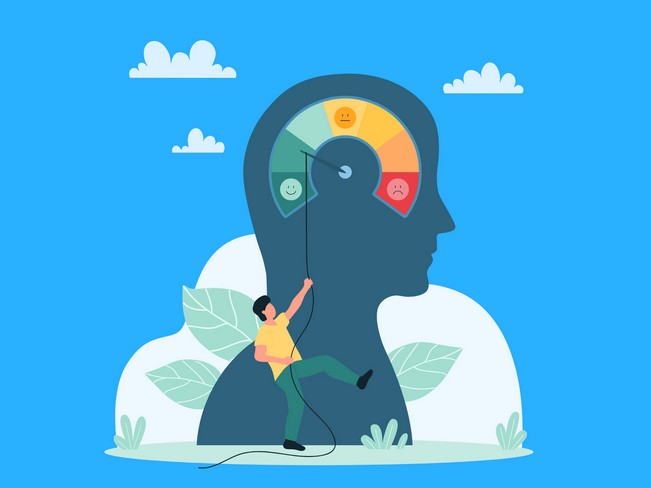
The breakthrough insight I gained wasn’t that these experts lacked negative feelings; it was that they possessed a highly developed psychological thermostat. They didn’t suppress their feelings; they mastered the art of emotional regulation.
Learning to govern your inner world is not about transforming into an unfeeling robot. It is about closing the dangerous gap between experiencing a raw feeling and executing a real-world reaction.
The Neurobiology of a Mood Spike: Inside the Amygdala Hijack
To effectively practice emotional regulation, we must first look at the underlying neurological architecture of the human brain.
Think of your brain as a modern office building. On the ground floor sits the amygdala, an ancient, primitive structure responsible for your survival instincts. On the top floor sits the prefrontal cortex, the highly evolved executive suite responsible for logic, long-term planning, and rational thought.
[ Emotional Trigger ] ──> Amygdala (Ground Floor: Panic/Rage)
                                 │  (Bypasses Logic)
                                 ▼
                    [ Immediate Impulsive Reaction ]
                                 vs.
[ Emotional Regulation ] ──> Prefrontal Cortex (Top Floor: Rational Choice)
                                 │  (Creates Space)
                                 ▼
                    [ Measured, Thoughtful Response ]
When someone insults you or a sudden crisis hits, the ground-floor amygdala interprets it as a literal threat to your life. It fires an immediate alarm, bypassing the executive suite entirely.
This is what neuroscientists call an amygdala hijack. Your body floods with cortisol and adrenaline, locking you into a primitive fight-or-flight state before your logical top floor even realizes what happened.
Why Suppressing Your Feelings is a Dangerous Mistake
When beginners attempt to master emotional regulation, they almost always default to emotional suppression—pushing the discomfort down, putting on a brave face, and pretending everything is fine.
As someone who has tracked long-term psychosomatic health data for a decade, I cannot emphasize this enough: suppression is a ticking time bomb.
Think of your feelings as steam building up inside a high-pressure pressure cooker. If you tightly seal the vent and refuse to let the steam escape, the machine doesn’t stop boiling. The pressure simply accumulates until the metal compromises, leading to a catastrophic explosion.
In human terms, chronic suppression leads to localized physical inflammation, severe sleep disturbances, clinical burnout, and sudden outbursts of rage over trivial issues. Real regulation means acknowledging the steam exists, understanding why it’s boiling, and safely venting it before the system breaks.
Evidence-Based Techniques for Real-Time Emotional Regulation
The next time you feel a wave of anxiety, anger, or despair threatening to hijack your prefrontal cortex, deploy these proven behavioral strategies to reclaim your cognitive control.
1. The 5-4-3-2-1 Grounding Method
When an intense feeling hits, your mind instantly detaches from the present moment and begins spinning worst-case scenarios. This simple sensory scan forces your brain to disengage from the emotional spiral and re-anchor itself in physical reality.
-
5: Identify five things you can visually see around you.
-
4: Identify four physical textures you can feel (e.g., your feet on the floor, the fabric of your shirt).
-
3: Identify three distinct sounds you can hear in the distance.
-
2: Identify two scents you can actively smell.
-
1: Identify one taste you can perceive in your mouth.
2. Cognitive Reappraisal (Reframing the Narrative)
We rarely get upset by an objective event; we get upset by the specific story we tell ourselves about that event. Cognitive reappraisal involves consciously pausing to rewrite that internal script.
-
Old Script: “My manager didn’t reply to my urgent email because she thinks my work is terrible and I’m going to get fired.”
-
New Script: “My manager hasn’t replied because she is likely drowning in her own meetings today. This is a reflection of her schedule, not my professional value.”
3. Box Breathing to Reset the Nervous System
You cannot separate the mind from the body. When you are anxious, your breathing becomes shallow, signaling to your nervous system that you are in mortal danger. You can intentionally override this loop using box breathing, a technique utilized by elite athletes and military personnel to maintain operational calm.
| Step | Action | Duration | Physiological Impact |
| 1 | Inhale deeply through your nose | 4 Seconds | Expands the lungs, drawing oxygen deep into the tissue. |
| 2 | Hold your breath at the top | 4 Seconds | Stabilizes blood pressure and heart rate variability. |
| 3 | Exhale completely through your mouth | 4 Seconds | Stimulates the vagus nerve to trigger the parasympathetic nervous system. |
| 4 | Hold your lungs empty | 4 Seconds | Resets the respiratory center in the brainstem. |
Pro Tips: Cultivating Emotional Granularity
Most people describe their internal state using incredibly broad, blunt terms: “I feel bad,” “I am angry,” or “I am stressed.” However, clinical data shows that individuals who practice high emotional granularity—the ability to identify and label highly specific shades of feelings—experience significantly better mental health outcomes.
Expert Advice: Expand Your Vocabulary
The next time you feel “bad,” challenge yourself to dig deeper. Are you actually angry, or are you feeling ignored? Are you stressed, or are you feeling ill-prepared? Labeling a feeling with pinpoint precision acts like a localized laser strike. The moment you give a complex feeling a highly specific name, your prefrontal cortex instantly dials down the intensity of the amygdala’s alarm.
Building Long-Term Psychological Resilience
True emotional regulation is a perishable skill. Just like building physical muscle at the gym, you cannot expect to lift heavy psychological weights if you do not train during your calm, daily life.
-
Audit Your Intestinal Microbiome: A staggering 90% of your body’s serotonin receptors (the neurotransmitter responsible for mood stabilization) live in your gut. A diet packed with ultra-processed foods sabotages your emotional baseline before you even open your mouth to speak.
-
Prioritize Sleep Architecture: Sleep deprivation directly degrades the structural connection between your prefrontal cortex and your amygdala. If you are chronically exhausted, you are functionally operating with an unhinged emotional alarm system.
-
Embrace the 90-Second Rule: Harvard neuroanatomist Dr. Jill Bolte Taylor discovered that the cellular lifespan of an emotional flush through your bloodstream lasts exactly 90 seconds. If you can simply breathe through a wave of anger or panic for one and a half minutes without feeding it new thoughts, the physical chemical storm will naturally dissipate on its own.
Reclaiming the Driver’s Seat of Your Mind
Your feelings are incredible data points, but they make terrible decision-makers. You do not have to live your life reacting to every internal storm or external provocation. By understanding your neurological triggers, avoiding the trap of suppression, and actively practicing real-time regulation, you step out of the passenger seat and become the conscious driver of your life.
The next time you feel a massive emotional wave building up inside you, which specific technique from this article are you going to deploy first? Have you ever successfully used reframing to de-escalate a fight? Let’s share our practical tips and insights in the comments below!