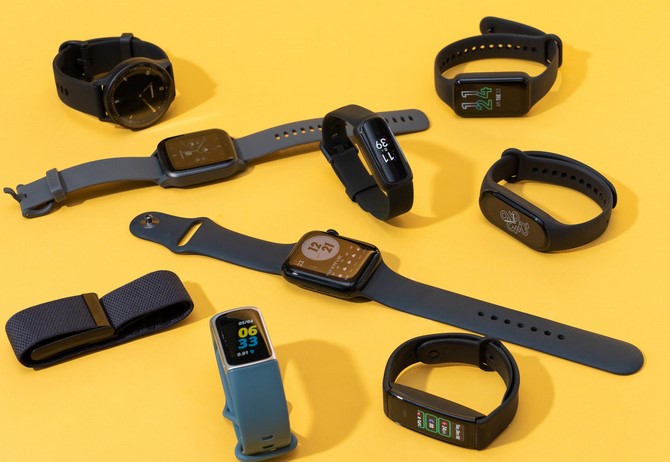
Imagine standing in the electronics aisle, staring at a wall of sleek, glowing wristbands. One promises to read your stress levels, another claims to track your REM sleep, and a third insists it can predict your recovery time after a workout. You check your phone, only to see an ad for a smart ring that does it all without a screen. It’s overwhelming, isn’t it? You just wanted to move a bit more, but now you feel like you need a PhD in data science just to buy a watch.
In my twelve years as a health writer and fitness tech consultant, I have strapped nearly a hundred different Digital Fitness Trackers to my wrists, fingers, and chest straps. I’ve seen the industry evolve from simple pedometers that counted “steps” (even when you were just waving your hand) to sophisticated biometric laboratories that live on your skin.
What I’ve learned is a truth the marketing teams won’t tell you: The most expensive tracker is not the best one. The “best” tracker is the one that actually changes your behavior without making you feel like a slave to the data. Let’s cut through the noise and find the right tool for your specific journey.
1. The “Dashboard” Analogy: Why We Use Fitness Tech
Think of your body as a high-performance vehicle. You can drive it without a dashboard—you’ll still get where you’re going—but you won’t know if your engine is overheating or if you’re about to run out of fuel.
Digital Fitness Trackers serve as your body’s dashboard. They don’t do the “driving” (the exercise) for you, but they provide the real-time feedback—like Heart Rate Variability (HRV) or oxygen saturation (SpO2)—that tells you when to push harder and when to pull over for a rest.
2. Matching the Tracker to Your Unique Archetype
Before looking at brands, you must identify your goal. In my experience, most users fall into three categories. Matching your tracker to your “type” prevents you from overpaying for features you will never use.
The Lifestyle Optimizer (Beginner)
If your goal is general wellness—hitting 10,000 steps, improving sleep quality, and managing stress—you don’t need a $600 sapphire-glass sports watch.
-
Focus: Step counting, basic sleep stages, and Sedentary Reminders.
-
Best Fit: Sleek, lightweight bands like the Fitbit Luxe or the Xiaomi Mi Band series. These are “set it and forget it” devices.
The Performance Athlete (Intermediate)
If you are training for a 10K, a triathlon, or a powerlifting meet, you need accuracy in the high-intensity zones.
-
Focus: VO2 Max estimation, GPS accuracy for pace/distance, and recovery metrics.
-
Best Fit: Brands like Garmin or Polar. These devices prioritize Optical Heart Rate (OHR) sensors that can handle the sweat and movement of a vigorous workout.
The Health Monitor (Metric-Focused)
Perhaps you are managing a condition like hypertension or simply want to dive deep into your longevity markers.
-
Focus: ECG (Electrocardiogram) capabilities, blood pressure trends, and skin temperature.
-
Best Fit: The Apple Watch Series or the Oura Ring. These devices lean heavily into medical-grade sensors and lifestyle integration.
3. The Technical Pillars: What’s Under the Hood?
When you read a spec sheet for Digital Fitness Trackers, certain terms act as a seal of quality. If a device doesn’t mention these, proceed with caution.
-
PPG (Photoplethysmography): This is the green light on the back of your tracker. It measures blood flow to determine your heart rate. Higher-end trackers use multiple green and infrared lights for better accuracy across different skin tones.
-
3-Axis Accelerometer: This determines movement. It’s the reason your watch knows you’re walking and not just brushing your teeth.
-
Bioimpedance Sensors: Often found in high-end scales or advanced wearables, these measure body composition or skin conductance to track stress (EDAs).
4. The “Sleep Data” Trap: Accuracy vs. Insight
One observation I’ve made over the years is that people get obsessed with their “Sleep Score.” I once worked with a client who became so anxious about her “Poor” sleep score on her tracker that the anxiety actually caused her to sleep worse the following night.
Insight: Most wrist-based Digital Fitness Trackers are excellent at detecting when you are asleep, but they are only about 60-70% accurate at distinguishing between Deep Sleep and REM sleep compared to a clinical sleep study.
Use sleep data as a trend, not a gospel. If your “Deep Sleep” is consistently low, look at your caffeine intake or screen time—don’t panic over a single night’s data.
💡 Pro Tip: The “Wrist Swap” for Accuracy
If you have a smaller wrist or a lot of wrist hair, the optical sensor might struggle to get a clear reading during high-intensity exercise. To improve accuracy without buying a chest strap, try sliding the tracker two finger-widths above your wrist bone (further up your forearm) and tightening it slightly. This flatter, fleshier area provides a much cleaner signal for the sensors.
5. Ecosystem and Battery Life: The Invisible Constraints
A tracker is only useful if it’s on your wrist. If you have to charge your watch every single night (like some high-end smartwatches), you will eventually miss your sleep data.
-
Smartwatch (1-2 day battery): Great for replying to texts and taking calls, but annoying for 24/7 health tracking.
-
Fitness Band (5-10 day battery): The “sweet spot” for most users.
-
Smart Ring (4-7 day battery): Excellent for those who hate wearing watches but want 24/7 biometric monitoring.
Consider your “Ecosystem.” If you use an iPhone, an Apple Watch offers seamless integration. If you are an Android enthusiast, Google-integrated Fitbits or Garmin’s robust app might feel more intuitive.
6. The Psychological Impact: Gamification and Burnout
The dark side of Digital Fitness Trackers is the “streak.” Closing your rings or hitting your step goal for 100 days straight feels amazing—until you get the flu.
I’ve seen many beginners give up on their health journey entirely because they “broke their streak.” It’s vital to choose a tracker that allows for Rest Days. Some newer devices now include a “Readiness Score” that actually tells you to take it easy if your HRV is low. This is a massive leap forward in preventing burnout.
Data Privacy and Your Health
Here is a “Hidden Warning” that many users ignore in the excitement of a new gadget: You are the product.
Many “cheap” or off-brand Digital Fitness Trackers make their money by selling your biometric data to third-party advertisers or insurance aggregators. Before you sync your most intimate health data, check the privacy policy. Stick to reputable brands that allow you to opt out of data sharing. Your heart rate and sleep patterns are private—keep them that way.
Summary: Designing Your Digital Health Partner
Choosing between the various Digital Fitness Trackers isn’t about finding the one with the most “stuff.” it’s about finding the one that speaks your language.
If you love data and graphs, get a Garmin. If you want a stylish accessory that helps you sleep better, get an Oura Ring or a Fitbit. If you want a personal assistant on your wrist that also happens to track your runs, the Apple Watch is your winner.
At the end of the day, no piece of technology can replace the “felt sense” of your own body. Use these tools to validate what you feel, but never let a “Red” score on a screen tell you that you didn’t have a good day.
What’s your “Must-Have” feature?
When you look at your wrist (atau jari), what is the one piece of information you can’t live without? For me, it’s my Resting Heart Rate—it’s my early warning system for when I’m getting sick.
I want to hear from you: Are you looking for a tracker to help you lose weight, train for a race, or just sleep better? Drop a comment below with your main goal, and I’ll help you narrow down the perfect device for your budget!